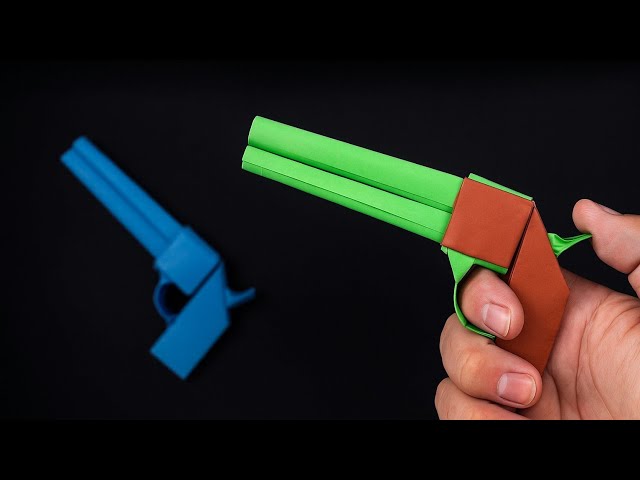
Crafting a paper gun involves utilizing origami techniques to fold and shape paper into a firearm replica. This intricate art form, originating in Japan, empowers individuals to create realistic-looking models without the use of traditional materials like wood or metal.
The allure of paper guns lies in their non-lethal nature, providing a safe and imaginative way to engage in pretend play or creative expression. They serve as educational tools, fostering an appreciation for both art and engineering principles. Historically, paper guns have been employed in theatrical performances and as props in films, contributing to the world of entertainment.
Within the realm of paper gun creation, numerous designs and variations exist, ranging from simple models suitable for beginners to complex replicas that challenge even experienced folders. The art form encompasses a wide spectrum of skill levels, offering opportunities for both casual enthusiasts and dedicated origami experts to explore their creativity.
how to make a gun with paper
Crafting a paper gun entails a unique blend of art and engineering, offering a captivating avenue for creative expression. To delve into this intriguing realm, let’s explore six key aspects that define the essence of “how to make a gun with paper”:
- Precision Folding: The art of paper gun making hinges on precise folding techniques, transforming flat sheets of paper into intricate three-dimensional forms.
- Origami Mastery: Rooted in the ancient Japanese art of origami, paper gun creation draws upon a vast repertoire of folds and techniques, empowering creators to shape paper with remarkable accuracy.
- Design Complexity: Paper guns encompass a spectrum of designs, from beginner-friendly models to intricate replicas that challenge experienced folders, catering to diverse skill levels.
- Structural Integrity: Despite their delicate appearance, well-crafted paper guns exhibit surprising structural integrity, holding their shape with remarkable resilience.
- Creative Expression: The art of paper gun making transcends mere imitation, offering a platform for personal creativity and artistic interpretation.
- Educational Value: Paper gun making fosters an appreciation for geometry, engineering principles, and the transformative power of creativity.
These key aspects intertwine to form the very essence of paper gun making, an art that seamlessly blends artistic expression with technical precision. Whether it’s the intricate folds that bring a design to life, the mastery of origami techniques that guide the process, or the boundless creativity that fuels innovation, each aspect contributes to the unique charm and allure of this captivating art form.
Precision Folding
In the realm of paper gun making, precision folding stands as a cornerstone technique, transforming flat sheets of paper into intricate three-dimensional forms. This art requires a steady hand, a keen eye, and an unwavering attention to detail, as even the slightest deviation can disrupt the delicate balance of the design.
- Accuracy and Attention to Detail: Paper gun making demands meticulous folding, ensuring that each crease and fold aligns perfectly. This precision not only affects the gun’s overall appearance but also its structural integrity and functionality.
- Understanding Paper Properties: Different types of paper possess unique properties that influence the folding process. Paper gun makers must carefully select paper that is both durable enough to hold its shape and flexible enough to accommodate complex folds.
- Mastering Origami Techniques: Origami, the ancient art of paper folding, provides a rich repertoire of techniques that are essential for paper gun making. These techniques allow for the creation of intricate shapes and mechanisms, bringing paper guns to life.
- Patience and Practice: Precision folding is a skill that requires patience and dedication to develop. With practice, paper gun makers refine their techniques, achieving greater accuracy and dexterity with each creation.
The art of precision folding lies at the heart of paper gun making, empowering creators to transform ordinary sheets of paper into captivating works of art and engineering. Through careful attention to detail, an understanding of paper properties, and the mastery of origami techniques, paper gun makers breathe life into their creations, showcasing the boundless possibilities of this unique art form.
Origami Mastery
Within the realm of “how to make a gun with paper,” origami mastery plays an integral role, providing the foundation for shaping paper with remarkable accuracy. Origami, the ancient Japanese art of paper folding, offers a rich repertoire of folds and techniques that empower paper gun makers to transform flat sheets of paper into intricate three-dimensional forms.
- Precision and Detail: Origami techniques demand precision and attention to detail, ensuring that each fold aligns perfectly. This precision is vital for achieving the intricate shapes and mechanisms that characterize paper guns, contributing to their overall realism and functionality.
- Structural Integrity: Origami folds not only enhance the aesthetics of paper guns but also contribute to their structural integrity. By understanding the load-bearing properties of different folds, paper gun makers can create models that are both durable and resilient.
- Artistic Expression: Origami techniques provide a platform for artistic expression, allowing paper gun makers to explore their creativity and personal style. Through the manipulation of paper, they can create unique and imaginative designs that transcend mere imitation.
- Educational Value: Origami in paper gun making fosters an appreciation for geometry, engineering principles, and the transformative power of creativity. It encourages problem-solving skills and spatial reasoning, making it an engaging and educational activity.
Origami mastery is the cornerstone of “how to make a gun with paper,” providing the essential techniques and knowledge for shaping paper with remarkable accuracy. It empowers paper gun makers to create intricate and realistic models, express their creativity, and gain a deeper understanding of geometry and engineering principles.
Design Complexity
Within the realm of “how to make a gun with paper,” design complexity stands as a defining characteristic, encompassing a wide range of models that cater to diverse skill levels and creative preferences.
- Beginner-Friendly Models: For those new to the art of paper gun making, beginner-friendly models provide an accessible entry point. These designs typically feature simpler folds and require less dexterity, allowing aspiring paper gun makers to quickly experience the joy of creation.
- Intermediate Designs: As paper gun makers progress in their keterampilan, they may seek more challenging models that push the boundaries of their abilities. Intermediate designs introduce more intricate folds and mechanisms, requiring greater precision and attention to detail.
- Advanced Replicas: At the pinnacle of paper gun making lie advanced replicas, meticulously crafted to resemble real-life firearms with astonishing accuracy. These designs demand a high level of skill and patience, often requiring hours of work to complete.
- Artistic Interpretations: Beyond replicating existing firearms, paper gun makers also engage in artistic interpretations, creating unique and imaginative designs that transcend traditional forms. These models showcase the boundless creativity of the art form, often incorporating elements of fantasy or science fiction.
Design complexity in paper gun making not only caters to diverse skill levels but also fosters a sense of accomplishment and creative fulfillment. As paper gun makers progress through increasingly challenging designs, they develop their skills, expand their knowledge of origami techniques, and gain a deeper appreciation for the art form.
Structural Integrity
In the realm of “how to make a gun with paper,” structural integrity plays a pivotal role, as it determines the durability and functionality of the paper gun. Well-crafted paper guns, despite their delicate appearance, exhibit surprising structural integrity, enabling them to hold their shape with remarkable resilience, even after repeated use.
- Precision Folding: The precision of the folding technique directly influences the structural integrity of the paper gun. Precise folds ensure that the paper is evenly distributed throughout the model, creating a sturdy and durable structure.
- Choice of Paper: The type of paper used also affects the structural integrity of the paper gun. Thicker, more durable paper can withstand more stress and handling, resulting in a more resilient model.
- Engineering Principles: An understanding of engineering principles can help in designing paper guns with enhanced structural integrity. By incorporating principles such as triangulation and load distribution, paper gun makers can create models that can withstand greater forces.
- Origami Techniques: Origami techniques provide a wealth of structural solutions for paper gun making. By utilizing techniques such as interlocking folds and hidden supports, paper gun makers can create models with exceptional strength and stability.
The structural integrity of paper guns not only affects their durability but also influences their functionality. A well-crafted paper gun with high structural integrity can withstand the forces generated by repeated “firing” without losing its shape or compromising its accuracy. This makes them ideal for use in pretend play, target practice, and even educational demonstrations.
Creative Expression
Within the realm of “how to make a gun with paper,” creative expression plays a pivotal role, as it elevates paper gun making beyond mere imitation and into the realm of art and self-expression. This unique aspect of the art form allows paper gun makers to showcase their creativity and personal style, resulting in an array of unique and imaginative designs.
The connection between creative expression and paper gun making is evident in the wide range of designs that exist, from realistic replicas of firearms to whimsical and fantastical interpretations. Paper gun makers are not bound by the constraints of replicating real-world objects; they are free to explore their imaginations and create models that reflect their unique personalities and artistic vision. This freedom of expression empowers paper gun makers to push the boundaries of the art form and create truly original works of art.
Moreover, creative expression in paper gun making extends beyond the design stage. The act of folding and shaping paper into a gun requires a high level of skill and dexterity, providing paper gun makers with an opportunity to refine their techniques and develop their own unique style. Through practice and experimentation, paper gun makers can develop a mastery of origami techniques and apply them in innovative ways to create models that are both aesthetically pleasing and structurally sound.
In conclusion, creative expression is an integral part of “how to make a gun with paper,” allowing paper gun makers to transcend mere imitation and create unique and imaginative works of art. This aspect of the art form not only provides a platform for personal expression but also fosters the development of skills and mastery of origami techniques.
Educational Value
The art of paper gun making not only provides creative enjoyment but also offers significant educational value. Through the process of folding and shaping paper into intricate gun replicas, individuals can gain a deeper understanding of geometry, engineering principles, and the transformative power of creativity.
Geometry plays a crucial role in paper gun making, as the precise folding techniques require an understanding of angles, shapes, and spatial relationships. By following instructions or creating their own designs, paper gun makers learn about the properties of different geometric shapes and how they can be combined to form complex structures.
Furthermore, paper gun making involves the application of basic engineering principles. The design of a paper gun must consider factors such as balance, stability, and structural integrity. Paper gun makers learn about the principles of load-bearing and stress distribution by experimenting with different folding techniques and materials.
Perhaps most importantly, paper gun making fosters an appreciation for the transformative power of creativity. By transforming a simple sheet of paper into a realistic-looking gun, paper gun makers witness the potential of their own imagination and the ability of their hands to create something truly unique.
In conclusion, the educational value of paper gun making extends beyond the mere creation of a toy. It provides a hands-on learning experience that promotes an understanding of geometry, engineering principles, and the transformative power of creativity.
FAQs on “How to Make a Gun with Paper”
This section addresses frequently asked questions and misconceptions surrounding the art of paper gun making, providing clear and informative answers.
Question 1: Is it illegal to make paper guns?
In most countries, making paper guns is perfectly legal, as they are classified as toys or works of art rather than weapons. However, it’s important to be mindful of local regulations and to avoid creating paper guns that could be mistaken for real firearms.
Question 2: Are paper guns dangerous?
Well-crafted paper guns pose no inherent danger and are not capable of firing projectiles or causing harm. However, it’s crucial to handle them responsibly and avoid pointing them at others, as they may be mistaken for real guns.
Question 3: What is the best type of paper for making paper guns?
The choice of paper depends on the desired result. Thicker, more durable paper is ideal for creating sturdy and long-lasting models, while thinner paper allows for more intricate folding and detailing.
Question 4: How difficult is it to make a paper gun?
The difficulty level varies depending on the design and complexity of the paper gun. Beginner-friendly models can be made with simple folds, while advanced replicas require a high level of skill and patience.
Question 5: Can paper guns be used for self-defense?
Paper guns are not suitable for self-defense purposes. They are not capable of firing projectiles or deterring an attacker and could potentially escalate a dangerous situation if mistaken for a real firearm.
Question 6: What are the benefits of making paper guns?
Paper gun making offers several benefits, including the development of fine motor skills, spatial reasoning, and an appreciation for geometry and engineering principles. It can also be a fun and creative activity for people of all ages.
In conclusion, paper gun making is a safe and engaging activity that provides educational and creative benefits. By understanding the answers to these common questions, individuals can approach the art form with confidence and enjoy its many rewards.
Transition to the next article section: Exploring the Creative Potential of Paper Gun Making
Tips for Crafting Paper Guns
The art of paper gun making offers a unique blend of creativity and precision. To achieve the best results, consider the following tips:
Tip 1: Choose the Right Paper
The type of paper used significantly impacts the durability and aesthetics of the paper gun. Opt for thicker, more durable paper for sturdy models that can withstand repeated use. For intricate designs with fine details, thinner paper is more suitable.
Tip 2: Master Basic Folds
Paper gun making relies heavily on precise folding techniques. Dedicate time to mastering basic folds such as the square fold, triangle fold, and origami crease. These folds form the foundation for more complex designs.
Tip 3: Pay Attention to Detail
Accuracy and attention to detail are crucial in paper gun making. Ensure that each fold is precise and aligns perfectly with the instructions. This attention to detail will result in a more realistic and structurally sound paper gun.
Tip 4: Experiment with Different Designs
Don’t limit yourself to replicating existing firearms. Explore your creativity by experimenting with different designs and interpretations. This experimentation will enhance your skills and allow you to create unique paper gun models.
Tip 5: Understand the Mechanics
For added realism and functionality, gain a basic understanding of firearm mechanics. This knowledge will help you design paper guns that mimic the operation of real firearms, enhancing their playability and educational value.
Tip 6: Practice Regularly
Like any skill, paper gun making requires practice to improve dexterity and precision. Dedicate time to regularly practice folding and assembling paper guns. With consistent effort, you will notice significant improvements in your craftsmanship.
Tip 7: Seek Inspiration
Explore online resources, books, and tutorials to find inspiration and expand your knowledge of paper gun designs. Learning from experienced paper gun makers can accelerate your progress and introduce you to new techniques.
By following these tips, you can elevate your paper gun making skills, create impressive models, and enjoy the many benefits this art form has to offer.
Transition to the article’s conclusion: The Art of Paper Gun Making: A Journey of Creativity and Precision
Conclusion
The art of “how to make a gun with paper” is a fascinating and rewarding pursuit that combines creativity, precision, and an appreciation for geometry and engineering principles. Through the act of folding and shaping paper, individuals can transform a simple sheet into intricate replicas of firearms, fostering their imagination and developing valuable skills.
This article has explored the key aspects of paper gun making, from the importance of precision folding and origami mastery to the significance of design complexity, structural integrity, and creative expression. It has also addressed frequently asked questions and provided tips for crafting impressive paper guns.
As you embark on your own paper gun making journey, remember that the true joy lies in the process of creation itself. Embrace the challenge of mastering new folds, experimenting with different designs, and pushing the boundaries of your creativity. Whether you are a seasoned paper gun enthusiast or just starting your exploration, may this article serve as a valuable resource and inspiration.
Youtube Video: