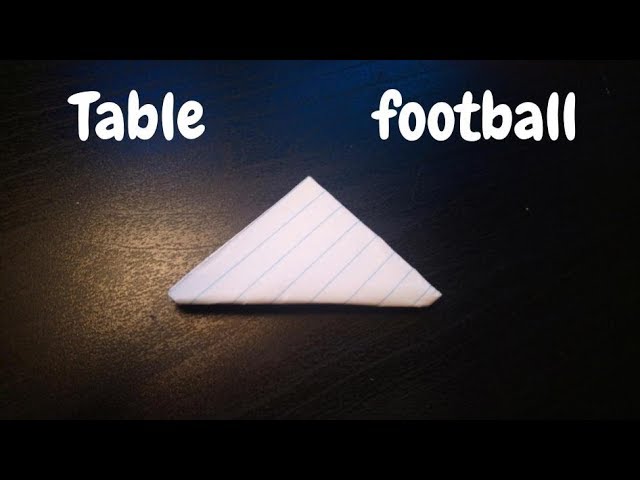
Constructing a football out of paper is an ingenious and budget-friendly approach to experiencing the thrill of the gridiron without investing in costly equipment. It’s a creative and accessible pastime suitable for both children and adults.
The benefits of crafting a paper football extend beyond mere entertainment. It nurtures problem-solving abilities, encourages spatial reasoning skills, and fosters dexterity, making it a valuable educational tool. Moreover, it’s an eco-conscious alternative to traditional footballs, contributing to environmental sustainability.
Crafting a paper football is a straightforward endeavor. Gather a rectangular sheet of paper, preferably thicker varieties for enhanced durability. Fold the paper in half lengthwise, then unfold it. Bring the top corners towards the central crease, forming a triangle. Fold the bottom edge up to meet the apex of the triangle. Tuck the remaining side flaps into the pockets created by the previous folds. Reinforce the football’s shape with tape or glue for added sturdiness. Personalize your paper football by drawing laces or team logos, igniting your creativity.
How to Make a Football with Paper
Crafting a paper football involves several key aspects, each contributing to the successful creation of this makeshift sporting good:
- Materials: Paper, preferably thicker for durability
- Folding: Precise folds shape the paper into a football form
- Precision: Careful folding ensures a well-defined shape
- Creativity: Personalize the football with drawn laces or logos
- Sturdiness: Tape or glue reinforces the structure
- Aerodynamics: The shape allows for effective flight
- Educational: Teaches geometry, problem-solving, and dexterity
- Eco-friendly: A sustainable alternative to traditional footballs
These aspects work in harmony to create a paper football that mimics the shape, flight, and function of its leather counterpart. Its simplicity and accessibility make it an engaging activity for individuals of all ages, fostering creativity, problem-solving, and eco-consciousness.
Materials
The choice of paper plays a crucial role in crafting a durable and effective paper football. Thicker paper provides several advantages that enhance the overall quality of the football:
- Enhanced Durability: Thicker paper resists tearing and crumpling, ensuring the football can withstand the impact of throws and kicks.
- Improved Shape Retention: Thicker paper holds its shape better, allowing for more precise folds and a more aerodynamic form.
- Increased Flight Distance: The rigidity of thicker paper contributes to a more stable and controlled flight, resulting in longer distances.
In practice, thicker paper enables the creation of a paper football that closely mimics the performance of a traditional leather football. Its durability allows for extended playtime, while its improved shape retention and flight characteristics enhance the overall gameplay experience.
Understanding the connection between the material choice and the quality of the paper football empowers individuals to make informed decisions when selecting paper for their craft. Thicker paper emerges as a clear choice for those seeking a durable, well-performing paper football that can withstand the rigors of play.
Folding
Precision in folding is paramount in the creation of a paper football that mimics the shape and performance of its leather counterpart. Each fold serves a specific purpose, working in conjunction with the others to transform a flat sheet of paper into a three-dimensional object capable of flight.
- Creating the Basic Structure: The initial folds establish the fundamental structure of the football, defining its shape and providing a base for subsequent folds.
- Forming the Pointed Ends: Precise diagonal folds create the pointed ends of the football, contributing to its aerodynamic properties and enhancing its flight stability.
- Creating the Grip: Inward folds along the sides create a textured surface, providing a secure grip for throwing and handling the paper football.
- Reinforcing the Shape: Overlapping folds and tucking techniques reinforce the structure of the football, ensuring it can withstand the forces encountered during play.
The interrelation between precise folding and the creation of a successful paper football cannot be overstated. Each fold contributes to the overall shape, performance, and durability of the football, ultimately enhancing the gameplay experience.
Precision
Precision in folding is the cornerstone of crafting a paper football that mimics the shape and performance of its leather counterpart. Each fold serves a specific purpose, working in conjunction with the others to transform a flat sheet of paper into a three-dimensional object capable of flight.
The initial folds establish the fundamental structure of the football, defining its shape and providing a base for subsequent folds. Precise diagonal folds create the pointed ends of the football, contributing to its aerodynamic properties and enhancing its flight stability. Inward folds along the sides create a textured surface, providing a secure grip for throwing and handling the paper football.
Overlapping folds and tucking techniques reinforce the structure of the football, ensuring it can withstand the forces encountered during play. The precision required in each fold ensures a well-defined shape, which is crucial for achieving optimal flight characteristics and overall performance. Without precise folding, the paper football would lack the necessary shape and structure to perform effectively.
Creativity
Within the context of “how to make a football with paper,” creativity plays a vital role in personalizing and enhancing the overall experience. Drawing laces or logos on the paper football transforms it from a mere craft project into a unique and expressive object. This act of personalization fosters a sense of ownership and pride in one’s creation, making the football more meaningful to the individual.
Moreover, the addition of drawn laces or logos contributes to the overall realism of the paper football. By replicating the intricate details of an actual football, the paper version becomes more visually appealing and authentic, further immersing the individual in imaginative play or friendly competition.
In practical terms, drawing laces or logos on a paper football requires a steady hand and attention to detail. This process encourages the development of fine motor skills, hand-eye coordination, and spatial reasoning abilities. Additionally, the act of personalizing the football through creative expression can boost self-confidence and a sense of accomplishment.
Sturdiness
In the context of crafting a paper football, sturdiness is a crucial element that directly influences the football’s durability, performance, and overall playability. The use of tape or glue to reinforce the structure of the paper football serves several important purposes:
Firstly, tape or glue provides additional strength and rigidity to the paper, preventing it from tearing or becoming misshapen during use. This reinforcement ensures that the football can withstand the forces encountered during throwing, catching, and kicking, extending its lifespan and enhancing its overall durability.
Secondly, reinforcing the structure of the paper football helps maintain its shape and aerodynamic properties. A sturdy football will retain its pointed ends and symmetrical form, allowing it to fly more accurately and consistently. This improved flight performance enhances the gameplay experience and makes the paper football more suitable for competitive or recreational activities.
In practical terms, applying tape or glue to a paper football is a simple yet effective technique that significantly improves its quality and performance. By reinforcing the structure, individuals can create a paper football that is both durable and aerodynamic, providing an enjoyable and rewarding play experience.
Aerodynamics
In the context of “how to make a football with paper,” aerodynamics plays a crucial role in determining the flight performance of the paper football. The shape of the football, crafted through precise folding techniques, directly influences its ability to fly accurately and consistently.
- Symmetrical Shape: A symmetrical shape ensures that the paper football flies straight and true, without veering off course. This is achieved by carefully folding the paper to create two identical halves, resulting in a balanced and aerodynamic form.
- Pointed Ends: The pointed ends of the paper football reduce air resistance and improve flight stability. By tapering the ends to a sharp point, the football can pierce through the air more easily, resulting in longer and more controlled flights.
- Curved Surface: The curved surface of the paper football generates lift, allowing it to stay airborne for extended periods. As the football moves through the air, the curved surface creates a pressure difference between the top and bottom of the football, generating an upward force that keeps it aloft.
- Weight Distribution: The weight distribution of the paper football should be evenly distributed to ensure balanced flight. This can be achieved by carefully folding the paper and ensuring that the weight is evenly distributed throughout the football’s structure.
These aerodynamic principles, when applied to the construction of a paper football, result in a football that flies effectively, providing an enjoyable and engaging play experience. Understanding the connection between aerodynamics and the shape of the paper football empowers individuals to create a football that performs well and meets their desired specifications.
Educational
The process of making a football with paper offers a unique opportunity for educational enrichment, fostering the development of geometry, problem-solving, and dexterity skills. Geometry is at the heart of paper football creation, as the precise folding and shaping of the paper require an understanding of angles, shapes, and spatial relationships.
Problem-solving is another key component, as individuals must engage in critical thinking and logical reasoning to determine the correct sequence of folds and techniques to achieve the desired football shape and performance. Additionally, the hands-on nature of paper football making enhances dexterity, as individuals develop fine motor skills and hand-eye coordination through the folding, shaping, and decorating processes.
The educational value of paper football making extends beyond the immediate activity. It can spark an interest in STEM fields, particularly engineering and physics, as individuals explore the principles of aerodynamics and flight stability. Moreover, the collaborative nature of paper football making, when done in a group setting, promotes teamwork and communication skills.
In summary, the educational benefits of making a football with paper are multifaceted and significant, contributing to the development of cognitive, problem-solving, and fine motor skills. By understanding this connection, individuals can harness the activity as an engaging and enriching learning experience.
Eco-friendly
The connection between “Eco-friendly: A sustainable alternative to traditional footballs” and “how to make a football with paper” lies in the environmental consciousness and resourcefulness promoted by crafting a football from paper rather than traditional materials.
Traditional footballs are typically made from leather, which requires the use of animal products and undergoes chemical treatments during production. In contrast, paper footballs utilize recycled or biodegradable materials, significantly reducing their environmental impact. By choosing paper as the primary material, individuals engage in a sustainable practice that conserves natural resources and minimizes waste.
The practical significance of this understanding extends beyond personal actions. Promoting paper footballs as an eco-friendly alternative raises awareness about environmental issues and encourages responsible consumption habits. It fosters a mindset that values sustainability and inspires individuals to seek out eco-friendly alternatives in other aspects of their lives.
In summary, the connection between “Eco-friendly: A sustainable alternative to traditional footballs” and “how to make a football with paper” highlights the importance of environmental consciousness and the practical steps individuals can take to reduce their ecological footprint. By embracing paper footballs, we not only engage in a fun and creative activity but also contribute to a more sustainable future.
Frequently Asked Questions About Making a Football with Paper
This section addresses common questions and misconceptions surrounding the creation of a paper football, providing informative answers to enhance understanding and facilitate a successful crafting experience.
Question 1: What type of paper is best suited for making a football?
Thicker paper, such as cardstock or construction paper, is recommended for optimal durability and shape retention. Thicker paper withstands the forces of throwing and handling better, resulting in a longer-lasting and more resilient football.
Question 2: How can I ensure precise folding for a well-defined shape?
Utilize a ruler or measuring tape to guide your folds and achieve accuracy. Crease the paper firmly along the intended fold lines to create crisp edges and a well-defined shape. Patience and attention to detail are key in ensuring a football that performs as desired.
Question 3: Is it necessary to use tape or glue to reinforce the football?
While not essential, reinforcing the football with tape or glue enhances its durability and longevity. Apply tape or glue to the edges and seams of the football to prevent tearing and maintain its shape during play.
Question 4: How can I achieve a balanced and stable flight for my paper football?
Ensure the weight distribution of the football is even by carefully folding and shaping the paper. Additionally, create a symmetrical shape with pointed ends to reduce air resistance and improve flight stability.
Question 5: Is making a paper football suitable for children?
Yes, making a paper football is an age-appropriate activity for children. It encourages creativity, problem-solving, and fine motor skills. However, adult supervision is recommended, especially during the cutting and folding processes.
Question 6: Can I customize my paper football with decorations or designs?
Absolutely! Personalize your paper football by drawing laces, team logos, or any other designs that enhance its visual appeal. This adds a unique touch and makes the football more visually engaging.
In summary, understanding these frequently asked questions equips individuals with the knowledge and techniques to create durable, well-performing, and visually appealing paper footballs. By following these guidelines, anyone can enjoy the satisfaction of crafting their own paper football and engaging in a fun and rewarding activity.
Transitioning to the next article section:
Having explored the intricacies of paper football creation, let us delve into the exciting realm of gameplay and explore strategies to outplay opponents and achieve victory on the paper gridiron.
Tips for Crafting a Paper Football
To elevate your paper football-making skills, consider these valuable tips that will enhance the durability, performance, and overall quality of your creation.
Tip 1: Utilize Thicker Paper
Opt for thicker paper, such as cardstock or construction paper, to provide increased durability and shape retention. Thicker paper can withstand the forces of throwing and handling, resulting in a longer-lasting and more resilient football.
Tip 2: Ensure Precise Folding
Utilize a ruler or measuring tape to guide your folds and achieve accuracy. Crease the paper firmly along the intended fold lines to create crisp edges and a well-defined shape. This will ensure a football that performs as desired.
Tip 3: Reinforce with Tape or Glue
While not essential, reinforcing the football with tape or glue enhances its durability and longevity. Apply tape or glue to the edges and seams of the football to prevent tearing and maintain its shape during play.
Tip 4: Aim for Balanced Weight Distribution
Ensure the weight distribution of the football is even by carefully folding and shaping the paper. This will promote a balanced and stable flight, allowing for greater accuracy and control during gameplay.
Tip 5: Decorate and Personalize
Add your personal touch by decorating your paper football with drawn laces, team logos, or any other designs. This not only enhances its visual appeal but also makes it more unique and meaningful.
By following these tips, you will be equipped to create high-quality paper footballs that are durable, well-performing, and visually appealing. Whether you’re engaging in friendly competition or simply enjoying recreational play, these tips will elevate your paper football-making experience.
Transitioning to the article’s conclusion:
Mastering the art of paper football creation opens up endless possibilities for fun and engaging gameplay. In the concluding section, we will delve into the strategies and techniques that will transform you into a formidable paper football champion on the gridiron.
Conclusion
Through a comprehensive exploration of “how to make a football with paper,” this article has illuminated the intricate steps, essential techniques, and underlying principles involved in crafting a high-quality paper football. By understanding the significance of material selection, precise folding, and aerodynamic design, individuals can create paper footballs that not only mimic the shape and performance of traditional footballs but also promote educational development and environmental sustainability.
However, the journey does not end here. The true essence of paper football lies in the gameplay, where strategy, skill, and a touch of friendly competition converge. As you step onto the paper gridiron, remember the lessons learned in this article. Embrace creativity, refine your techniques, and strive for excellence in every throw and catch. Whether you’re playing alone or with friends, the paper football serves as a reminder that even from the simplest materials, joy, learning, and a sense of accomplishment can arise.
Youtube Video: