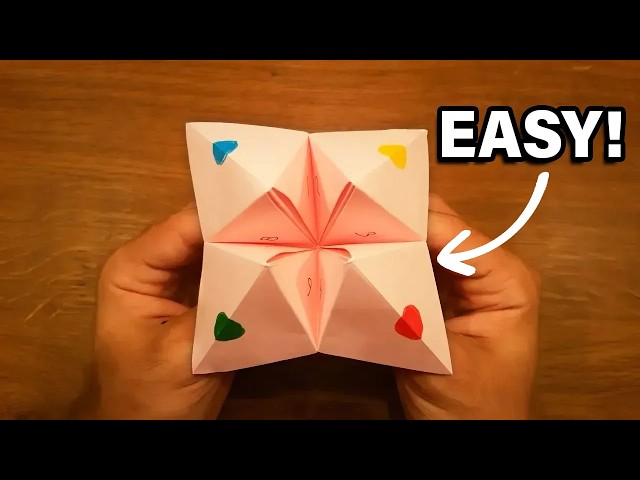
Crafting a fortune teller, also known as a cootie catcher or salt cellar, is an enjoyable pastime that combines creativity and entertainment. It involves folding a piece of paper into a specific shape to create a multi-sectioned figure, each section containing a different message or fortune. The act of opening and closing the fortune teller reveals the hidden messages, adding an element of playful divination to the experience.
The origins of the fortune teller are shrouded in mystery, but it is believed to have emerged in the early 20th century. Over the years, it has become a popular activity among children and adults alike, often used as a party game or a simple way to pass the time. Its simplicity and adaptability have ensured its enduring popularity, with variations and embellishments appearing in different cultures and regions.
To create a fortune teller, you will need a square piece of paper. Follow these steps:
- Fold the paper in half diagonally to form a triangle.
- Unfold the paper and fold it in half again, this time along the other diagonal.
- Unfold the paper and bring the four corners to the center point, forming a smaller square.
- Fold the top and bottom points of the square to the center point.
- Fold the left and right points of the square to the center point.
- Turn the paper over and repeat steps 4 and 5.
- Pull the two bottom flaps outward to form a diamond shape.
- Insert your fingers into the two side flaps and gently push outward to open the fortune teller.
You can now write your fortunes on the inside sections of the fortune teller. Be creative and have fun with your messages!
How to Make a Fortune Teller
Creating a fortune teller, also known as a cootie catcher or salt cellar, is a fun and engaging activity that involves folding a piece of paper into a specific shape to create a multi-sectioned figure, each section containing a different message or fortune. The act of opening and closing the fortune teller reveals the hidden messages, adding an element of playful divination to the experience. Here are seven key aspects to consider when making a fortune teller:
- Materials: Paper and writing implements
- Folding: Precise folds to create the shape
- Sections: Number and arrangement of sections
- Messages: Creative and varied fortunes
- Decoration: Personalization and embellishment
- Game: Using the fortune teller for entertainment
- Cultural: Variations and significance in different cultures
These aspects are interconnected and contribute to the overall experience of making and using a fortune teller. The choice of materials, the precision of the folding, and the creativity of the messages all impact the final product. The act of writing the fortunes can be a form of self-expression, while the decoration can reflect the maker’s personality or interests. The fortune teller can be used as a game, a way to pass the time, or even a tool for self-reflection. Understanding these key aspects allows you to create a fortune teller that is both unique and meaningful.
Materials
In the context of making a fortune teller, the materials used play a crucial role in determining the final product. Paper serves as the foundation for the fortune teller’s structure, providing the surface on which the folds and sections are created. The quality and thickness of the paper can affect the ease of folding and the durability of the fortune teller. Writing implements, such as pens, pencils, or markers, are essential for inscribing the fortunes and messages on the sections of the fortune teller.
The choice of paper and writing implements can impact the overall appearance and effectiveness of the fortune teller. For instance, thicker paper may be more challenging to fold but can result in a sturdier fortune teller. The color and texture of the paper can also be used to create a specific aesthetic or match a particular theme. Similarly, the type of writing implement used can influence the visibility and longevity of the fortunes. Pens with vibrant ink colors can create eye-catching messages, while pencils may allow for easier erasing and revisions.
Understanding the connection between materials and the process of making a fortune teller is important for several reasons. Firstly, it allows for informed decision-making regarding the selection of materials, ensuring that they are appropriate for the desired outcome. Secondly, it helps appreciate the interplay between materials and techniques, recognizing how the properties of paper and writing implements influence the folding and writing process. Finally, it highlights the practical significance of materials in creating a successful fortune teller that meets the intended purpose, whether for entertainment, divination, or artistic expression.
Folding
In the context of making a fortune teller, precise folding is a fundamental component that determines the overall shape and functionality of the final product. The act of folding the paper in a specific sequence and with precision allows for the creation of the characteristic sections and flaps that define the fortune teller’s structure. Without precise folding, the fortune teller would lack its distinctive shape and ability to open and close, concealing and revealing the written fortunes.
The importance of precise folding extends beyond the physical structure of the fortune teller. It also influences the aesthetic appeal and the effectiveness of the fortune-telling process. Uneven or imprecise folds can result in a lopsided or asymmetrical fortune teller, detracting from its overall appearance. Moreover, inaccurate folding can affect the alignment of the sections, making it difficult to open and close the fortune teller smoothly and access the messages within.
Understanding the connection between folding and the process of making a fortune teller is crucial for several reasons. Firstly, it highlights the importance of careful and meticulous folding techniques in achieving a successful outcome. Secondly, it demonstrates how precise folding contributes to the functionality and usability of the fortune teller, ensuring that it can be opened and closed effortlessly. Finally, it underscores the role of folding as an essential step in creating an aesthetically pleasing and effective fortune teller that meets the intended purpose.
Sections
In the art of crafting a fortune teller, the number and arrangement of sections play a pivotal role in shaping its functionality and divinatory potential. The sections serve as compartments that house the written fortunes, and their configuration determines the sequence in which the messages are revealed. Understanding this connection is essential for creating a well-structured and effective fortune teller.
The number of sections typically ranges from four to eight, with each number yielding a distinct variation in the fortune teller’s operation. A four-section fortune teller, for instance, allows for straightforward divination with a limited set of options, while an eight-section fortune teller offers a more intricate and nuanced experience. The choice of the number of sections depends on the desired level of complexity and the intended use of the fortune teller.
Equally important is the arrangement of the sections. The most common arrangement involves organizing the sections in a symmetrical pattern, ensuring that the fortune teller opens and closes smoothly. However, alternative arrangements, such as asymmetrical or radial patterns, can introduce an element of surprise and unpredictability to the fortune-telling process.
The connection between sections, number, and arrangement, and the process of making a fortune teller highlights several key insights. Firstly, it demonstrates the importance of careful planning and design in creating a fortune teller that meets specific requirements. Secondly, it underscores the interplay between structure and function, showing how the number and arrangement of sections influence the fortune teller’s usability and effectiveness. Finally, it emphasizes the creative potential of fortune teller making, as the number and arrangement of sections offer opportunities for customization and personal expression.
Messages
In the art of making a fortune teller, the messages inscribed within its sections hold immense significance. These messages, often referred to as fortunes, serve as the core element of the fortune teller’s divinatory purpose. Understanding the connection between messages and the process of making a fortune teller reveals the creative and varied aspects that contribute to its overall effectiveness and appeal.
-
Originality and Creativity
The messages written on a fortune teller should exhibit originality and creativity. These fortunes can range from simple words of wisdom to playful predictions, and their effectiveness lies in their ability to surprise, inspire, or amuse the reader. Creative messages add an element of unpredictability and intrigue to the fortune teller, making each experience unique.
-
Variety and Diversity
The fortunes inscribed on a fortune teller should offer variety and diversity. This ensures that the fortune teller can provide a wide range of possible outcomes, catering to different moods, situations, and preferences. Variety in the messages keeps the fortune teller engaging and prevents it from becoming repetitive or predictable.
-
Personalization and Customization
The messages on a fortune teller can be personalized and customized to reflect the interests, beliefs, or experiences of the maker or user. This customization adds a personal touch to the fortune teller, making it more meaningful and relatable. Personalized messages can also be used to address specific questions or concerns.
-
Cultural and Contextual Relevance
The messages on a fortune teller can be influenced by cultural and contextual factors. Different cultures have their own unique beliefs, traditions, and symbols that can be incorporated into the fortunes. By considering the cultural and contextual background, the messages can resonate more deeply with the user and add an extra layer of significance.
In conclusion, the connection between messages and the process of making a fortune teller highlights the importance of creativity, variety, personalization, and cultural relevance. By carefully crafting the messages, fortune tellers can become powerful tools for entertainment, self-reflection, and cultural exploration.
Decoration
In the art of crafting a fortune teller, decoration plays a significant role in personalizing and embellishing the experience, adding a unique touch that reflects the maker’s creativity and style. This connection between decoration and the process of making a fortune teller manifests in various ways, influencing both the aesthetic appeal and the overall divinatory experience.
Decoration can enhance the visual appeal of a fortune teller, making it a visually engaging and captivating object. By incorporating personal touches, such as drawings, stickers, or colorful patterns, the maker can create a fortune teller that is both aesthetically pleasing and meaningful. Moreover, decoration can be used to reflect the maker’s personality, interests, or current mood, transforming the fortune teller into a unique and expressive work of art.
Beyond its aesthetic value, decoration can also influence the divinatory experience. The use of specific symbols, colors, or images can add an extra layer of meaning to the fortunes, allowing the user to connect with the messages on a deeper level. For example, incorporating nature-inspired motifs can evoke a sense of grounding and connection to the natural world, while using celestial imagery can create a mystical or ethereal atmosphere.
Understanding the connection between decoration and the process of making a fortune teller highlights the importance of personalization and embellishment in creating a meaningful and engaging experience. By carefully considering the choice of decorative elements, the maker can craft a fortune teller that is both visually appealing and personally significant, enhancing the overall divinatory experience.
Game
The connection between “Game: Using the fortune teller for entertainment” and “how to make a fortune teller” lies in the inherent purpose and enjoyment derived from the activity. Making a fortune teller is not merely about creating a paper object but about crafting a tool for entertainment and amusement. The game aspect is an integral component that gives meaning and value to the process of making a fortune teller.
The act of using the fortune teller for entertainment involves engaging with the finished product, unfolding its sections, and revealing the hidden messages. This interactive element adds an air of excitement and anticipation, making the fortune teller more than just a static object. The game aspect transforms it into a source of entertainment, whether played alone or with others.
Understanding this connection is important for several reasons. Firstly, it highlights the interplay between creation and usage, demonstrating how the purpose of a fortune teller extends beyond its physical construction. Secondly, it underscores the role of entertainment as a driving force behind the popularity and enduring appeal of fortune tellers. Finally, it emphasizes the practical significance of considering the game aspect when making a fortune teller, ensuring that the final product is not only well-crafted but also enjoyable to use.
Cultural
The connection between “Cultural: Variations and significance in different cultures” and “how to make a fortune teller” lies in the diverse ways that cultures have shaped the practice and meaning of fortune telling. Understanding this connection is essential for appreciating the richness and complexity of fortune-telling traditions worldwide.
Cultural variations in fortune telling manifest in several aspects, including the materials used, the methods of divination, and the interpretation of the messages. For instance, in Japanese culture, omikuji, a form of fortune telling using paper slips, is commonly practiced at Shinto shrines. The slips contain messages ranging from good luck to misfortune, and their interpretation is influenced by traditional Japanese beliefs and values.
The significance of fortune telling varies across cultures. In some communities, it is seen as a playful activity or a source of entertainment. In others, it holds deep spiritual or religious meaning and is used for guidance and decision-making. The role of fortune telling in a particular culture is shaped by its history, beliefs, and social practices.
Understanding the cultural variations and significance of fortune telling is important for several reasons. Firstly, it fosters cultural sensitivity and appreciation for the diverse ways in which people around the world engage with the practice. Secondly, it helps us recognize the role of fortune telling in shaping cultural identities and traditions. Finally, it allows us to approach fortune telling with a nuanced and informed perspective, avoiding stereotypes and generalizations.
Frequently Asked Questions on Fortune Teller Making
This section addresses common questions and misconceptions surrounding the art of making fortune tellers, providing concise and informative answers to enhance your understanding:
Question 1: What materials are required to make a fortune teller?
Question 2: Are there any specific folding techniques involved?
Answer: Yes, precise folding is crucial to create the distinct sections and ensure the fortune teller functions properly.
Question 3: How many sections should a fortune teller have?
Answer: The number of sections can vary, but common options include 4, 6, or 8, each housing a different fortune.
Question 4: What should be included in the fortune messages?
Answer: Fortunes can range from words of wisdom and predictions to playful or thought-provoking statements.
Question 5: Can fortune tellers be personalized?
Answer: Yes, fortune tellers can be customized with decorations, colors, or messages that reflect personal preferences or styles.
Question 6: What are some cultural variations in fortune telling?
Answer: Fortune-telling practices vary across cultures, with different methods, materials, and interpretations of messages.
In summary, making a fortune teller involves careful folding, creative message writing, and optional personalization, while cultural influences shape the practice in diverse ways. Understanding these aspects enriches the experience and fosters a deeper appreciation for this timeless activity.
Proceed to the next section to delve into the cultural significance and variations of fortune tellers.
Tips for Making a Fortune Teller
Creating an engaging and effective fortune teller requires careful attention to detail and a touch of creativity. Here are five essential tips to guide you in the process:
Tip 1: Choose the Right Paper
Opt for sturdy paper that can withstand multiple folds without tearing. Thicker paper, such as origami paper or cardstock, provides a more durable base for your fortune teller.
Tip 2: Make Precise Folds
Precision is key when folding the paper. Crease along the lines firmly to create sharp edges and well-defined sections. This ensures smooth opening and closing of the fortune teller.
Tip 3: Write Creative Fortunes
Craft unique and thought-provoking fortunes that resonate with the intended audience. Use a mix of positive affirmations, playful predictions, and wise sayings to engage and entertain.
Tip 4: Personalize Your Fortune Teller
Add a personal touch by decorating the fortune teller with drawings, stickers, or colorful patterns. This customization makes it a unique and meaningful object.
Tip 5: Practice Opening and Closing
Once assembled, practice opening and closing the fortune teller to ensure smooth movement. This helps familiarize yourself with the mechanism and prevents tearing or damage.
These tips will empower you to create a fortune teller that is both visually appealing and functionally sound. Embrace the process, experiment with different designs, and enjoy the satisfaction of crafting a captivating and entertaining fortune-telling device.
Proceed to the next section to explore the cultural significance and variations of fortune tellers.
Conclusion
Through this comprehensive exploration of “how to make a fortune teller,” we have delved into the intricacies of crafting this timeless object. From selecting the appropriate paper to personalizing the design, each step contributes to the creation of a unique and engaging fortune-telling device.
Fortune tellers transcend mere entertainment; they hold cultural significance and reflect the diverse beliefs and practices of societies worldwide. Their messages, ranging from playful predictions to words of wisdom, offer a glimpse into the human desire for guidance and self-discovery.
As we continue to embrace the art of making fortune tellers, let us remember the importance of precision, creativity, and cultural sensitivity. By honing our skills and embracing the rich tapestry of fortune-telling traditions, we not only create captivating objects but also connect with the timeless pursuit of understanding our place in the world.
Youtube Video: