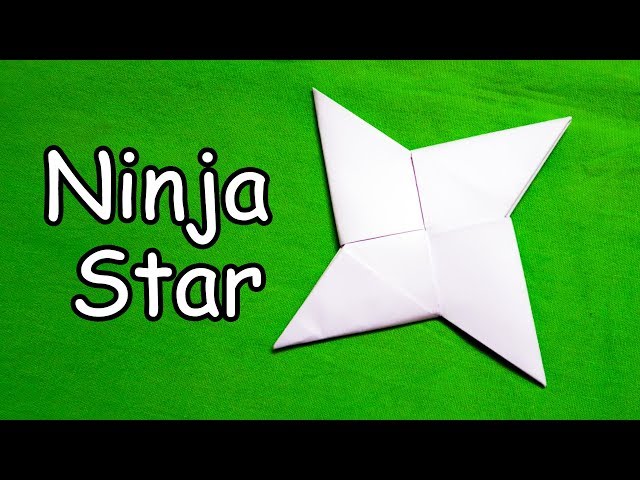
A shuriken, or Japanese throwing star, is a concealed weapon traditionally made from metal and thrown in self-defense or as a tool for assassination. The shuriken has been depicted in popular media and is often associated with the ninja. While metal shuriken can be dangerous and are illegal to possess in many jurisdictions, paper shuriken are a safe and fun way to learn about the art of shuriken throwing.
Paper shuriken are relatively easy to make and can be customized to your liking. They are also a great way to improve your hand-eye coordination and dexterity. In addition, paper shuriken can be used for target practice or as a fun party game.
To make a paper shuriken, you will need a square piece of paper. Fold the paper in half diagonally to create a triangle. Then, fold the triangle in half again to create a smaller triangle. Unfold the paper and fold the top two corners down to the center point. Fold the bottom two corners up to the center point. Finally, fold the paper in half horizontally to create a diamond shape. Your paper shuriken is now complete.
To throw a paper shuriken, hold it between your thumb and forefinger and spin it in a circular motion. Release the shuriken and watch it fly! You can experiment with different throwing techniques to see what works best for you.
Paper shuriken are a fun and safe way to learn about the art of shuriken throwing. They are also a great way to improve your hand-eye coordination and dexterity. So what are you waiting for? Make a paper shuriken today!
how to make a shuriken with paper
The art of making a shuriken with paper involves several key aspects. Understanding these aspects can not only enhance your ability to craft a well-balanced and effective paper shuriken but also provide insights into the broader context and significance of this unique practice.
- Materials: Paper, scissors, ruler
- Folding: Precise and accurate folding techniques
- Shape: Aerodynamic design for optimal flight
- Balance: Symmetrical construction for stability
- Weight: Paper thickness and density considerations
- Throwing: Spin, release, and trajectory control
- Safety: Avoiding sharp edges and responsible use
- Creativity: Customization and personal designs
These aspects are interconnected and play a crucial role in the overall effectiveness of a paper shuriken. For instance, the choice of paper and its thickness impact the weight and balance, affecting the shuriken’s flight trajectory. Similarly, the precision of folding determines the aerodynamic shape, which in turn influences the stability and accuracy of the throw. Understanding these connections allows you to experiment with different materials, folding techniques, and designs to create a paper shuriken that meets your specific needs and preferences.
Materials
In the context of making a shuriken with paper, the materials used play a crucial role in determining the overall quality and effectiveness of the finished product. The choice of paper, scissors, and ruler must be carefully considered to ensure that the shuriken is well-balanced, aerodynamic, and durable.
The paper used for making a shuriken should be thin and lightweight, yet strong enough to withstand the force of being thrown. Origami paper or thin cardstock are good choices, as they are easy to fold and can be cut precisely. The scissors used should be sharp and precise, as they will be used to make intricate cuts in the paper. A ruler is essential for measuring and ensuring that the shuriken is symmetrical and well-balanced.
The importance of using the right materials cannot be overstated. If the paper is too thick or too thin, the shuriken will not fly properly. If the scissors are dull or imprecise, the cuts in the paper will be uneven and the shuriken will not be balanced. And if the ruler is not used to ensure symmetry, the shuriken will not fly straight.
Understanding the connection between the materials used and the quality of the finished shuriken is essential for anyone who wants to make their own shuriken. By using the right materials and taking the time to carefully craft the shuriken, you can create a weapon that is both effective and visually appealing.
Folding
In the art of making a shuriken with paper, folding techniques are of paramount importance. Precise and accurate folds are essential for creating a shuriken that is well-balanced, aerodynamic, and effective. The intricate folds of a shuriken serve multiple purposes, from shaping the shuriken’s form to ensuring its stability during flight.
The first and most important fold is the center fold, which creates the shuriken’s basic shape. This fold must be precise in order to ensure that the shuriken is symmetrical and balanced. The subsequent folds, which create the shuriken’s points and wings, must also be precise in order to achieve the desired aerodynamic effect. If the folds are not accurate, the shuriken will not fly properly and will be less effective as a weapon.
In addition to ensuring the shuriken’s effectiveness, precise folding techniques also contribute to its beauty. A well-folded shuriken is a work of art, and the intricate folds add to its visual appeal. The precise folds also make the shuriken more durable, as they help to prevent the paper from tearing or creasing.
Understanding the connection between precise and accurate folding techniques and the effectiveness of a paper shuriken is essential for anyone who wants to make their own shuriken. By taking the time to learn and master these techniques, you can create a shuriken that is both beautiful and effective.
Shape
In the art of making a shuriken with paper, the shape of the shuriken is of paramount importance. The aerodynamic design of the shuriken is what allows it to fly straight and accurately. A well-designed shuriken will have a symmetrical shape with sharp points and balanced wings. This design will help to reduce drag and increase stability, allowing the shuriken to fly further and more accurately.
The shape of the shuriken also affects its cutting power. A sharp point will be able to penetrate more easily than a blunt point. The wings of the shuriken help to stabilize the shuriken during flight and also add to its cutting power. A well-designed shuriken will be able to cut through paper, cloth, and even thin metal.
Understanding the connection between the shape of the shuriken and its flight performance is essential for anyone who wants to make their own shuriken. By carefully designing the shape of the shuriken, you can create a weapon that is both effective and accurate.
Balance
In the art of making a shuriken with paper, balance is of paramount importance. A well-balanced shuriken will fly straight and accurately, while an unbalanced shuriken will wobble and veer off course. To achieve balance, a shuriken must be constructed symmetrically, with its weight evenly distributed around its center point.
The importance of balance can be seen in the design of traditional Japanese shuriken. These shuriken are typically made from a single piece of metal, which is folded and shaped to create a symmetrical form. The weight of the metal is evenly distributed around the center point, resulting in a shuriken that flies straight and accurately.
The same principles of balance apply to paper shuriken. When making a paper shuriken, it is important to ensure that the weight of the paper is evenly distributed around the center point. This can be done by using a ruler to measure and mark the center point of the paper, and then folding the paper symmetrically around this point.
Understanding the connection between balance and stability is essential for anyone who wants to make their own shuriken. By taking the time to construct a balanced shuriken, you can create a weapon that is both effective and accurate.
Weight
In the art of making a shuriken with paper, the weight of the paper is an important consideration. The thickness and density of the paper will affect the overall weight of the shuriken, which in turn will affect its flight performance. A shuriken that is too heavy will not fly as far or as accurately as a shuriken that is too light. The ideal weight for a paper shuriken is one that is light enough to fly easily, but heavy enough to have enough force to penetrate a target.
The thickness of the paper will also affect the shuriken’s durability. A thicker paper will be more durable than a thinner paper, and will be less likely to tear or crease when thrown. However, a thicker paper will also be heavier, so it is important to find a balance between thickness and weight.
The density of the paper will also affect the shuriken’s flight performance. A more dense paper will be more resistant to air resistance, and will therefore fly further and more accurately than a less dense paper. However, a more dense paper will also be heavier, so it is important to find a balance between density and weight.
Understanding the connection between weight, thickness, and density is essential for anyone who wants to make their own shuriken. By carefully considering the weight of the paper, you can create a shuriken that flies well and is durable enough to withstand repeated use.
Throwing
In the art of making a shuriken with paper, the techniques used for throwing the shuriken are just as important as the design of the shuriken itself. Spin, release, and trajectory control are three key elements that can affect the accuracy, distance, and effectiveness of a thrown shuriken.
-
Spin
Imparting spin to a shuriken as it is thrown helps to stabilize its flight and keep it on course. The spin also creates a gyroscopic effect, which helps to resist changes in the shuriken’s orientation. This makes it less likely to wobble or veer off course, even in windy conditions.
-
Release
The way in which the shuriken is released from the hand can also affect its flight. A smooth, controlled release will help to maintain the shuriken’s spin and trajectory. Releasing the shuriken with too much force or at an incorrect angle can cause it to wobble or veer off course.
-
Trajectory control
By adjusting the angle at which the shuriken is thrown, it is possible to control its trajectory. Throwing the shuriken at a higher angle will cause it to fly higher and travel a shorter distance. Throwing the shuriken at a lower angle will cause it to fly lower and travel a longer distance.
Understanding the connection between throwing techniques and the flight of a shuriken is essential for anyone who wants to master the art of shuriken throwing. By practicing and perfecting these techniques, it is possible to throw shuriken with accuracy, distance, and control.
Safety
In the art of making a shuriken with paper, safety should always be a top priority. Paper shuriken, while not as dangerous as their metal counterparts, can still cause injury if not handled and used responsibly. Avoiding sharp edges and practicing responsible use are essential to ensuring the safety of yourself and others.
-
Avoiding sharp edges
When making a paper shuriken, it is important to avoid creating sharp edges that could cause cuts or lacerations. This can be done by using a ruler to score the paper before folding it, and by carefully folding and creasing the paper to avoid creating any jagged edges. It is also important to trim any excess paper from the edges of the shuriken to prevent it from snagging on clothing or skin.
-
Responsible use
Paper shuriken should only be used in a safe and responsible manner. This means not throwing them at people or animals, and not using them in a way that could cause damage to property. It is also important to be aware of your surroundings when throwing paper shuriken, and to make sure that there are no people or objects in the area that could be hit.
By following these safety guidelines, you can help to ensure that your paper shuriken are used safely and responsibly, and that you and others are not put at risk of injury.
Creativity
In the art of making a shuriken with paper, creativity and personal designs play a significant role. The ability to customize and personalize shuriken allows individuals to express their creativity, while also creating a shuriken that is unique and tailored to their specific needs and preferences.
One way that individuals can customize their shuriken is by choosing different colors and patterns of paper. This allows them to create shuriken that are visually appealing and that reflect their personal style. Additionally, individuals can customize the size and shape of their shuriken, creating shuriken that are suited to their individual throwing style and preferences.
The ability to customize and personalize shuriken also allows individuals to create shuriken that are specifically designed for different purposes. For example, an individual may create a smaller, lighter shuriken for target practice, while creating a larger, heavier shuriken for self-defense. By customizing the design of their shuriken, individuals can create a weapon that is perfectly suited to their specific needs and requirements.
In conclusion, creativity and personal designs are an important part of the art of making a shuriken with paper. By customizing the design of their shuriken, individuals can create a weapon that is unique, visually appealing, and perfectly suited to their specific needs and preferences.
FAQs about “How to Make a Shuriken with Paper”
Here are some frequently asked questions about how to make a shuriken with paper:
Question 1: What type of paper is best for making a shuriken?
Answer: Thin, lightweight paper, such as origami paper or thin cardstock, is best for making a shuriken. This type of paper is easy to fold and cut, and it will fly well.
Question 2: What size should a shuriken be?
Answer: The size of a shuriken can vary depending on your personal preference. A good starting size for beginners is a square piece of paper that is about 6 inches by 6 inches.
Question 3: How do I fold a shuriken?
Answer: There are many different ways to fold a shuriken. One common method is to start with a square piece of paper and fold it in half diagonally to create a triangle. Then, fold the triangle in half again to create a smaller triangle. Unfold the paper and fold the top two corners down to the center point. Fold the bottom two corners up to the center point. Finally, fold the paper in half horizontally to create a diamond shape.
Question 4: How do I throw a shuriken?
Answer: To throw a shuriken, hold it between your thumb and forefinger and spin it in a circular motion. Release the shuriken and watch it fly! You can experiment with different throwing techniques to see what works best for you.
Question 5: Are paper shuriken dangerous?
Answer: Paper shuriken are not as dangerous as metal shuriken, but they can still cause injury if they are not handled and used properly. Always avoid sharp edges and be aware of your surroundings when throwing paper shuriken.
Question 6: Can I customize my shuriken?
Answer: Yes, you can customize your shuriken by choosing different colors and patterns of paper. You can also customize the size and shape of your shuriken. By customizing your shuriken, you can create a weapon that is unique and perfectly suited to your specific needs and preferences.
These are just a few of the frequently asked questions about how to make a shuriken with paper. With a little practice, you can learn how to make and throw a shuriken safely and accurately.
Summary: Making a shuriken with paper is a fun and challenging activity. By following the tips and instructions in this article, you can learn how to make a shuriken that is both effective and safe.
Transition: Now that you know how to make a shuriken with paper, you can learn how to use it for self-defense or as a fun party game.
Tips on How to Make a Shuriken with Paper
Making a shuriken with paper is a fun and challenging activity that can be enjoyed by people of all ages. With a little practice, you can learn how to make a shuriken that is both effective and safe.
Here are a few tips to help you get started:
Tip 1: Choose the right paper.
The type of paper you use will affect the weight, balance, and durability of your shuriken. For best results, use thin, lightweight paper, such as origami paper or thin cardstock.Tip 2: Fold the paper carefully.
The folds in your shuriken will determine its shape and flight characteristics. Be sure to fold the paper precisely and accurately. If the folds are not correct, the shuriken will not fly properly.Tip 3: Balance the shuriken.
A well-balanced shuriken will fly straight and accurately. To balance the shuriken, make sure that the weight is evenly distributed around the center point.Tip 4: Sharpen the points.
The points of the shuriken are what will cause damage. Be sure to sharpen the points to a fine point. This will help the shuriken to penetrate targets more easily.Tip 5: Practice throwing the shuriken.
The best way to improve your shuriken throwing skills is to practice. Find a safe place to throw the shuriken and practice until you can throw it accurately and with force.
By following these tips, you can learn how to make a shuriken with paper that is both effective and safe.
Summary: Making a shuriken with paper is a fun and challenging activity. With a little practice, you can learn how to make a shuriken that is both effective and safe.
Transition: Now that you know how to make a shuriken with paper, you can learn how to use it for self-defense or as a fun party game.
Conclusion
In this article, we have explored the art of making a shuriken with paper. We have discussed the materials, techniques, and safety considerations involved in making a shuriken. We have also provided tips on how to fold the paper, balance the shuriken, and sharpen the points.
With a little practice, you can learn how to make a shuriken with paper that is both effective and safe. This can be a fun and challenging activity for people of all ages. Whether you are interested in self-defense or simply want to have some fun, learning how to make a shuriken with paper is a great way to develop your skills and knowledge.
Youtube Video: