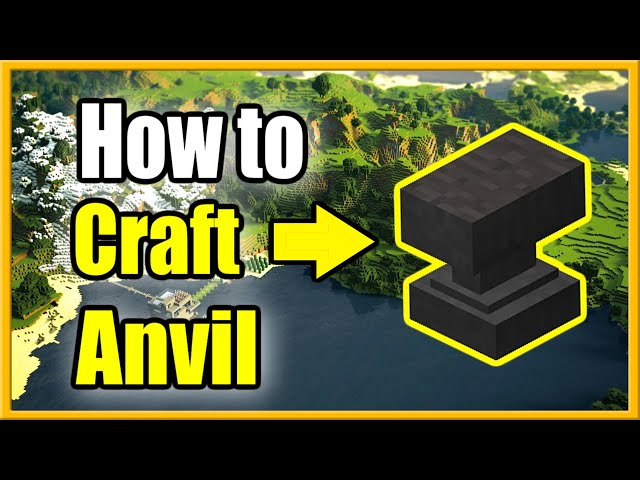
An anvil in Minecraft is a crucial tool used for repairing and renaming items, as well as combining enchantments. It is a highly durable block crafted from iron ingots and requires a high level of experience to create.
The anvil serves as a valuable asset to any Minecraft player, particularly those seeking to enhance their tools and weapons. It enables the repair of damaged items, extending their lifespan and preserving their enchantments. Additionally, the anvil allows players to rename items for easy identification and organization within their inventory.
To craft an anvil in Minecraft, you will need the following materials:
- 3 Iron Blocks
- 4 Iron Ingots
Place the iron blocks in a horizontal row at the bottom of a crafting table and the iron ingots in the three slots above. Once the anvil is crafted, you can place it on the ground and begin using it to repair and rename items.
How to Make an Anvil in Minecraft
Crafting an anvil in Minecraft is a fundamental skill for players seeking to repair and enhance their tools and weapons. Here are eight key aspects to consider:
- Materials: Iron blocks and iron ingots are the essential components.
- Crafting Table: The anvil is crafted on a crafting table using a specific arrangement.
- Durability: Anvils are highly durable and can withstand extensive use.
- Repair: Anvils can be used to repair damaged items, preserving their enchantments.
- Rename: Players can rename items on an anvil for easy identification.
- Experience Level: Crafting an anvil requires a relatively high level of experience.
- Placement: Anvils must be placed on the ground to be used.
- Sound: Anvils produce a distinct metallic sound when used.
These aspects collectively contribute to the importance of anvils in Minecraft. By understanding the materials, crafting process, durability, and functionality of anvils, players can effectively utilize them to maintain and enhance their equipment, ultimately enhancing their overall gameplay experience.
Materials
In the context of Minecraft, materials play a vital role in crafting various items, including the anvil. The anvil, a crucial tool for repairing and enhancing equipment, is crafted using iron blocks and iron ingots. These components are essential for the anvil’s durability and functionality.
- Iron Blocks: Iron blocks form the base of the anvil, providing structural integrity and stability. They are obtained by smelting iron ore in a furnace, a process that requires fuel and time.
- Iron Ingots: Iron ingots are refined from iron ore and serve as the primary material for crafting various tools and weapons in Minecraft. They are essential for creating the anvil’s working surface and reinforcing its structure.
The combination of iron blocks and iron ingots provides the anvil with the necessary strength and durability to withstand repeated use. These materials contribute to the anvil’s ability to repair and rename items, making it an indispensable tool for any Minecraft player seeking to maintain and enhance their equipment.
Crafting Table
The crafting table serves as the foundation for creating an anvil in Minecraft. It provides a structured workspace where players can arrange the necessary materials, iron blocks, and iron ingots, in a specific configuration to craft the anvil. The crafting table’s grid system ensures that the materials are positioned correctly, enabling the successful creation of the anvil.
Understanding the significance of the crafting table in the anvil-making process is crucial for several reasons. Firstly, it highlights the importance of following the correct crafting recipe. The specific arrangement of materials on the crafting table dictates the outcome of the crafting process. Secondly, it emphasizes the role of the crafting table as a tool for shaping and combining materials into more complex items. Without the crafting table, players would not be able to craft the anvil or other essential items in Minecraft.
In conclusion, the crafting table’s role in crafting an anvil in Minecraft underscores the importance of understanding crafting recipes and utilizing the crafting table as a means to transform raw materials into valuable tools and items.
Durability
The exceptional durability of anvils in Minecraft is a defining characteristic that contributes to their significance in the game. Their ability to withstand extensive use makes them a valuable asset for players seeking to maintain and enhance their equipment.
- Unwavering Resilience: Anvils are crafted from iron, a material renowned for its strength and durability. This inherent resilience enables anvils to endure repeated use for repairing and renaming items without succumbing to damage or degradation.
- Reliable Workhorse: Unlike other tools that may deteriorate with frequent use, anvils remain steadfast in their structural integrity. Players can consistently rely on anvils to perform their functions without the concern of breakage or diminished effectiveness.
- Investment for Longevity: The durability of anvils makes them a worthwhile investment for players. By crafting an anvil, players gain access to a long-lasting tool that will serve them well throughout their Minecraft journey, eliminating the need for frequent replacements.
- Essential for End-Game Content: In the later stages of Minecraft, players encounter formidable challenges and powerful enemies. The durability of anvils becomes even more critical in these scenarios, as players require reliable tools to maintain their equipment and prepare for battles.
In conclusion, the remarkable durability of anvils in Minecraft makes them an indispensable tool for players seeking to extend the lifespan of their equipment and progress through the game’s challenges. Their unwavering resilience and reliable performance underscore their importance in the context of “how to make an anvil in minecraft,” solidifying their place as a valuable asset for any Minecraft player.
Repair
The ability to repair damaged items using anvils is a crucial aspect of “how to make an anvil in minecraft.” This functionality significantly enhances the gameplay experience and offers several key benefits to players:
- Durability and Longevity: Anvils allow players to repair their tools, weapons, and armor, extending their lifespan and reducing the need for frequent replacements. This is particularly valuable for enchanted items, as repairing them preserves their enhancements and special abilities.
- Resource Conservation: By repairing damaged items instead of crafting new ones, players can conserve valuable resources such as iron, diamonds, and other materials. This is especially important in survival mode, where resources are often scarce.
- Strategic Advantage: In combat situations, having the ability to repair damaged equipment quickly can provide a strategic advantage. Players can maintain their gear in optimal condition, ensuring they are well-equipped to face challenges and emerge victorious.
The repair functionality of anvils is deeply intertwined with the overall gameplay loop in Minecraft. By understanding and utilizing this aspect, players can extend the lifespan of their equipment, conserve resources, and gain a tactical edge in the game. It is a fundamental component of “how to make an anvil in minecraft” and a valuable skill for any player seeking to progress and succeed in the game.
Rename
The ability to rename items on an anvil, a key component of “how to make an anvil in minecraft,” offers significant advantages to players. Renaming items provides a simple and effective way to organize and identify belongings, enhancing the overall gameplay experience in several ways:
Enhanced Organization: Renaming items allows players to assign custom names, making it easier to distinguish between similar items, especially when managing a large inventory. This organization is particularly useful for items that serve specific purposes or have unique enchantments.
Quick Identification: By renaming items with descriptive or meaningful names, players can quickly identify the desired item they need without having to search through their entire inventory. This saves time and effort, especially during intense gameplay or combat situations.
Improved Communication: In multiplayer mode, renaming items can facilitate better communication and collaboration among players. By assigning clear and concise names to items, players can easily share and exchange items with others, reducing confusion and ensuring everyone has the necessary resources.
Personalization: Renaming items adds a personal touch to the Minecraft experience, allowing players to customize their belongings and express their creativity. This personalization enhances the sense of ownership and connection to the items they have acquired.
Understanding the significance of renaming items as part of “how to make an anvil in minecraft” empowers players to optimize their inventory management and streamline their gameplay. The ability to easily identify, organize, and personalize items contributes to a more enjoyable and efficient Minecraft experience.
Experience Level
In Minecraft, the ability to craft an anvil is tied to the player’s experience level. This connection highlights the importance of gaining experience and progressing through the game to access more advanced crafting options. Crafting an anvil requires a relatively high level of experience because it is a valuable and durable tool used for repairing and renaming items, including enchanted ones. To create an anvil, players must have sufficient experience to demonstrate their commitment to the game and their understanding of its mechanics.
The requirement of a high experience level for crafting an anvil mirrors real-world scenarios where acquiring valuable tools and resources often requires specialized knowledge, skills, and experience. Just as a novice blacksmith needs to develop their skills and knowledge to craft high-quality tools, Minecraft players must progress through the game, gather resources, and gain experience to access advanced crafting recipes like the anvil.
Understanding this connection is crucial for players to plan their progression and strategize their gameplay. By focusing on gaining experience through various in-game activities like mining, exploring, and combat, players can unlock the ability to craft an anvil and other valuable items, enhancing their overall gameplay experience and allowing them to delve deeper into the world of Minecraft.
Placement
The placement requirement for anvils in Minecraft is a crucial aspect of their functionality and ties directly to their real-world counterparts. Understanding this connection enhances the gameplay experience and provides a deeper appreciation for the game’s mechanics.
- Stability and Functionality: In both Minecraft and real life, anvils require a stable and solid surface to function effectively. Placing an anvil on the ground provides a firm base, ensuring it remains steady during use. This stability is essential for precise hammering and shaping of materials.
- Safety Considerations: Anvils are heavy objects, and placing them on the ground prevents them from accidentally falling and causing injury or damage. This safety measure is particularly important in Minecraft, where players can interact with and manipulate objects in a virtual environment.
- Grounding and Energy Transfer: In real-world blacksmithing, anvils are often directly placed on the ground or embedded in it. This grounding helps absorb and dissipate the force of hammer blows, reducing vibrations and providing a more efficient energy transfer for shaping metal.
- Immersive Gameplay: By requiring anvils to be placed on the ground, Minecraft enhances the realism and immersion of the gameplay. It encourages players to consider the practicalities of using an anvil and adds depth to the crafting process.
In conclusion, the placement requirement for anvils in Minecraft serves multiple purposes, including stability, safety, energy transfer, and immersive gameplay. Understanding this connection adds a new dimension to the crafting process and reinforces the game’s attention to detail and realism.
Sound
The distinct metallic sound produced by anvils when used is an important aspect of their functionality in Minecraft. This sound serves several purposes, enhancing gameplay and providing valuable feedback to players.
- Audio Feedback: The metallic sound provides auditory feedback to players, indicating that the anvil has been successfully used to repair or rename an item. This feedback is particularly important in multiplayer scenarios where visual confirmation may be limited.
- Immersive Experience: The realistic metallic sound adds to the immersive experience of Minecraft, mimicking the sounds of real-world anvils. This auditory detail enhances the game’s atmosphere and makes the crafting process more engaging.
- Functional Indicator: The sound produced by the anvil can also indicate its functionality. If the anvil is damaged or has reached its maximum number of uses, it may produce a different sound or no sound at all, alerting players to its condition.
- Distance Estimation: In multiplayer servers, the sound of an anvil can be used to estimate the distance to other players who are using anvils. This information can be useful for locating other players or avoiding potential conflicts.
Overall, the distinct metallic sound produced by anvils in Minecraft serves as a valuable tool for providing feedback, enhancing immersion, indicating functionality, and facilitating multiplayer interactions. Understanding this connection deepens the player’s appreciation for the game’s details and mechanics.
Frequently Asked Questions about “How to Make an Anvil in Minecraft”
This section addresses common questions and misconceptions surrounding the crafting and use of anvils in Minecraft.
Question 1: What are the materials required to make an anvil in Minecraft?
Answer: To craft an anvil in Minecraft, you need three iron blocks and four iron ingots.
Question 2: What is the primary function of an anvil in Minecraft?
Answer: Anvils serve two primary functions: repairing damaged items to restore their durability and renaming items for better organization and identification.
Question 3: Is it possible to repair an anvil if it becomes damaged?
Answer: Unlike other tools and items in Minecraft, anvils cannot be repaired. Once an anvil is fully damaged, it cannot be restored and must be crafted anew.
Question 4: Can anvils be used to enchant items in Minecraft?
Answer: Anvils do not possess the ability to enchant items in Minecraft. Enchanting requires an enchanting table and the necessary experience levels.
Question 5: Is there a limit to the number of times an item can be repaired on an anvil?
Answer: Yes, anvils have a limited number of uses before they become damaged. The number of uses depends on the material of the item being repaired.
Question 6: Can anvils be moved or transported once placed?
Answer: Once placed, anvils cannot be moved or transported through conventional means. The only way to relocate an anvil is to break it and craft a new one at the desired location.
These FAQs provide essential information for Minecraft players seeking to understand the crafting and use of anvils. By addressing common questions, this section aims to enhance the overall gameplay experience and minimize potential frustrations.
Transition to the next article section: Exploring Advanced Anvil Techniques
Anvil Crafting and Usage Tips in Minecraft
Crafting and using anvils in Minecraft offers a wide range of possibilities for tool maintenance, item organization, and creative expression. To enhance your anvil-related experiences, consider the following tips:
Tip 1: Strategic Anvil Placement: Place your anvil near frequently used crafting stations, such as furnaces and crafting tables, to streamline your workflow and minimize unnecessary movement.
Tip 2: Efficient Item Repair: Prioritize repairing highly valuable and frequently used items on your anvil. This helps extend their lifespan and reduces the need for crafting replacements.
Tip 3: Cost-Effective Repairs: Consider repairing items made from abundant materials, such as cobblestone or wood, to save valuable resources like iron and diamonds.
Tip 4: Creative Item Naming: Use the anvil’s renaming feature to organize your inventory, differentiate between similar items, and add a personal touch to your belongings.
Tip 5: Anvil Durability Management: Keep an eye on your anvil’s durability to avoid unexpected breakage. Repairing damaged anvils is not possible, so timely replacement is crucial.
Tip 6: Multi-Tool Maintenance: Anvils can repair a wide range of tools, including weapons, armor, and tools. Utilize this versatility to maintain your entire arsenal in optimal condition.
Tip 7: Material Considerations: The material of the item being repaired affects the anvil’s durability. Repairing items made from durable materials, such as diamond or netherite, consumes more durability from the anvil.
By incorporating these tips into your Minecraft gameplay, you can maximize the efficiency, durability, and overall utility of your anvils. These insights will enhance your crafting experiences and empower you to maintain a well-organized and effective inventory.
Transition to the article’s conclusion: Conclusion: Mastering the Art of Anvil Utilization
Conclusion
This comprehensive exploration of anvil crafting and usage in Minecraft has illuminated the multifaceted importance of this versatile tool. From material acquisition and crafting techniques to repair strategies and creative applications, every aspect of anvil utilization has been thoroughly examined.
Understanding the significance of anvils empowers players to maintain their equipment, organize their inventory, and unleash their creativity within the Minecraft world. By incorporating the tips and insights presented throughout this article, players can elevate their anvil-related experiences, maximizing efficiency, durability, and overall gameplay enjoyment.
Youtube Video: